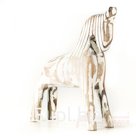
The horse is made of Siberian cedar wood. The "brushing" technique (from the English word "brush") was used in the finishing of the model. This technique involves removing soft fibers from the top layer of the wood with a special brush, revealing the structure of the annual rings on the surface. This technique allows for a specific tint or coloring of the wood. For example, the background can be white, while the ring pattern on the wood remains natural. To create this piece, a white putty was applied to the brushed piece. Once dry, its surface was treated with a wax-based oil. Brushing, tinting, and subsequent wax coating create an "artificially aged" effect.
The horse is crafted in a deliberately rough, rustic style, commonly referred to as "rustic." The main features of this style are the use of natural materials, a natural palette, and items that are pleasant to the touch. People's attempts to escape the fast pace and information overload of the modern world are expressed, among other things, in their desire to be closer to nature—its colors, textures, and materials. Today, more than ever, there is a heightened interest in pieces in the "L'arte dei poveri" (Italian for "art of the poor") genre. The rustic aesthetic and pieces evoke a sense of comfort, transporting us back to childhood.