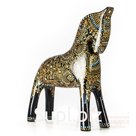
The horse's black body became the backdrop for a mehndi design, executed with gold lines and turquoise dots. Mehndi is a henna tattoo on the body, the tradition of which dates back to India in the 12th century. This technique was described in Vedic ritual books. Henna designs symbolize a person's inner light. They include plant and flower patterns, images of birds, and solar symbols. The distinctive features of the Indian mehndi style are fine, lace-like lines.
For a long time, henna designs were applied only to wealthy families, but later they became available to other social classes. Mehndi is believed to bring good luck, material well-being, and protect against the evil eye, accidents, and illness. Henna designs are typically applied to the hands, feet, shoulders, and neck. The application is slow and meditative.