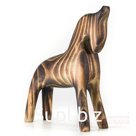
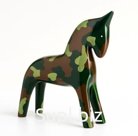
The horse is crafted from Siberian pine wood, the dark color of which is achieved through charring. The model is finished using the brushing technique (from the English word "brush"). This technique involves removing soft fibers from the top layer of the wood with a special brush, revealing the structure of the annual rings on the surface. This technique allows for a special tint to the wood. For example, the background will remain dark, while the ring pattern on the wood will be light. Brushing, tinting, and subsequent waxing create an "artificially aged" effect.
The horse is crafted in a deliberately rough, rustic style, commonly referred to by the general term "rustic." The main features of the style are the use of natural materials, a natural palette, and objects that are pleasant to the touch.
A person's attempt to escape the pace and information burden of the modern world is expressed, among other things, in their desire to be closer to nature—its colors, textures, and materials. Today, more than ever, there is a growing interest in the "L'arte dei poveri" (Italian for "art of the poor") genre. The rustic aesthetic and rustic pieces evoke a sense of comfort and bring back memories of childhood.